Custom Static Cling Mistakes to Avoid on Your First Order
The biggest custom static cling mistakes are printing for the wrong side of the glass, choosing a film that washes out the design, measuring the frame instead of the glass, and approving a proof too quickly. Custom Static Cling catches most of these in a free mockup within 24 hours, but knowing them first makes your first order go right.
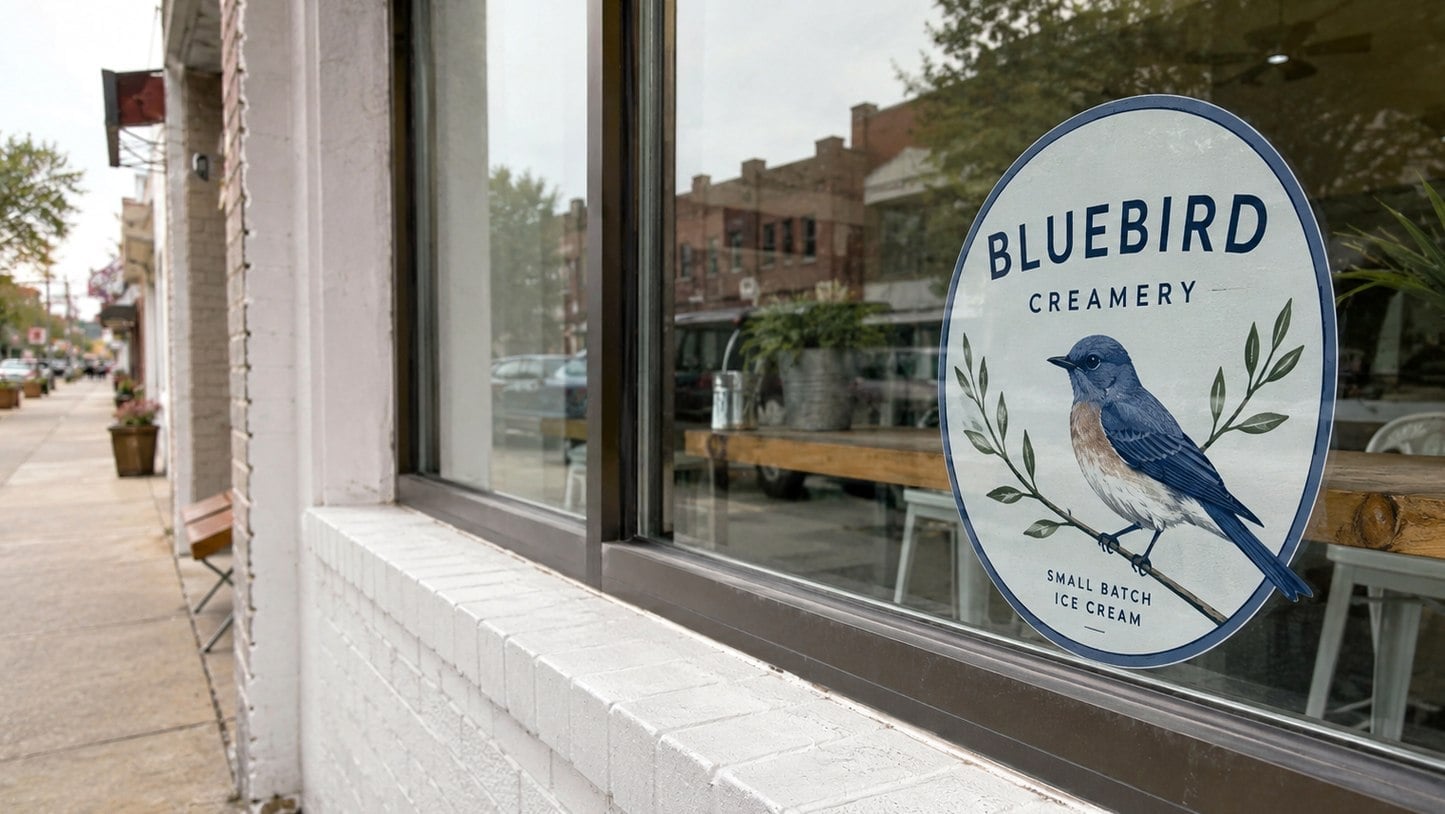
- Decide which side of the glass the static cling goes on and who reads it
- Measure the visible glass, not the frame, and send window photos
- White film keeps light colors solid; clear film can wash them out
- Free mockup within 24 hours, unlimited free revisions, pay nothing until you approve
- Minimum order is 12; standard turnaround is about 2 weeks
What is the most common mistake on a first custom static cling order?
The most common mistake on a first custom static cling order is printing for the wrong side of the glass. Most buyers picture the cling stuck on the outside of the storefront, but static cling is an indoor product, so it almost always goes on the inside surface. If the artwork is printed to read normally on the front of the film, people on the sidewalk see it backward.
The fix is to decide where the viewer stands before you send artwork. If shoppers read the window from the street while the cling sits on the inside of the glass, you need an interior-read cling, which is printed so the design reads correctly through the glass. If the message faces people inside the room, such as a cafe menu panel or office door sign, standard face printing is right.
Tell Custom Static Cling which surface the cling goes on and who reads it. The free mockup, returned within 24 hours, shows the orientation, and you pay nothing until you approve it. That single sentence in your quote request prevents the most expensive reprint in the category.
Why does a static cling design look faint or washed out on the window?
A static cling design looks faint when the film color does not match the background behind the glass. Clear static cling lets light and the scene behind it show through, so pale colors, thin lines and light text can fade against a bright interior or a busy shop floor. White static cling gives the artwork an opaque base, so colors hold up regardless of what sits behind the window.
| Situation | Better film choice | Why |
|---|---|---|
| Bold logo on a darker interior window | Clear static cling | Glass stays see-through and the dark background adds contrast |
| Light colors, photos or fine detail | White static cling | An opaque base keeps colors solid and readable |
| Hiding a back room or desk from view | Frosted privacy cling | Diffuses the view while still letting light through |
| Full-window graphic that still lets staff see out | One-way vision cling | Graphic shows from one side, view stays open from the other |
If you are unsure, describe the window and the room behind it when you request a quote. Custom Static Cling can show the same artwork on different films in the mockup so you compare before anything prints.
Should you measure the window frame or the visible glass for static cling?
Measure the visible glass, not the frame, when sizing custom static cling. Static cling only grips smooth glass, so any part of the design that lands on a metal frame, rubber gasket, painted mullion or door hardware will lift and curl. Buyers who measure frame to frame regularly end up trimming clings on site, which cuts into borders and sometimes into the logo itself.
- Measure the clear glass height and width inside the gasket on every pane, not just one.
- Note anything that interrupts the glass: push bars, handles, lock hardware, door closers, alarm sensors and existing hours decals.
- Leave a small margin inside the glass edge so the cling sits flat and is easy to lift for cleaning.
- Photograph each window straight on and send the photos with your quote request.
Photos matter more than most buyers expect. Custom Static Cling can place the artwork on your actual window in the mockup, which reveals a handle cutting through a tagline or a sensor sitting on the logo before production, not after the box arrives.
Can artwork that looks fine on a screen fail on a static cling?
Artwork that looks fine on a laptop can still fail on static cling, because a window is read from much farther away and through reflections. Thin script fonts, long sentences, small legal text and low-contrast color pairs that seem crisp on a screen often turn into a blur from the parking lot. A low-resolution logo pulled from a website or social profile can also print soft or jagged at window size.
Avoid the problem with a few habits:
- Send a vector logo, such as an AI, EPS, SVG or vector PDF file, whenever one exists.
- Cut the copy down to one headline, one supporting line and your brand mark.
- Use heavy, simple fonts for anything meant to be read from the street.
- Pick colors with strong contrast against both the film and the view behind the glass.
- Check how the design reads when you step back from your monitor.
Design help is part of the process. If your file is not print-ready, Custom Static Cling can rebuild or adjust it, and unlimited free revisions mean you can push the layout until it reads clearly at real distance.
What details do buyers forget to check on a static cling proof?
Buyers most often approve a static cling proof after checking the logo and headline but skipping the small details: phone numbers, web addresses, hours, spelling of street names and the reading direction. Once static cling is printed, every copy carries the same typo, so the proof is the cheapest place to catch it. Read the mockup slowly, out loud, and ideally with a second person.
- Confirm the reading direction: inside or outside of the glass.
- Read every phone number, URL and social handle character by character.
- Check that the size matches the glass measurements, not the frame.
- Confirm the film: clear, white, frosted or one-way vision.
- Compare colors against your brand guide and ask about Pantone matching if it matters.
- Confirm the quantity for each design and each size.
- Confirm the ship-to address and the date you need the cling installed.
Revisions are free and unlimited, so there is no reason to approve a proof that leaves you uncertain. Ask for another round instead; a change on screen takes minutes, while a reprint costs a fresh production cycle of about 2 weeks.
Is it a mistake to print dates and changing details on a reusable static cling?
Printing dates, temporary offers or changing hours on static cling is a common mistake when the cling is meant to be reused. One of the biggest advantages of static cling is that it peels off cleanly and goes back up next season, but a cling that says a specific year or a one-time sale cannot be reused after that event ends.
Split your window message into two layers. Put the evergreen part, such as your logo, a seasonal greeting or a standing message, on a reusable static cling. Put the short-lived details, such as a date or sale headline, on a smaller separate cling or a printed sign. That way the main piece earns its keep across many seasons, and only the small element changes.
Restaurants, cafes and bars run into this often with hours and specials; the static cling for restaurants, cafes and bars page covers how food businesses handle changing information on the glass.
How do ordering and storage habits ruin otherwise good static cling?
Good static cling is often ruined after delivery rather than in production. The usual causes are throwing away the backing liner, folding clings for storage, and installing on dusty or greasy glass. Static cling holds by close contact with a smooth surface, so anything that creases the film or traps grit underneath weakens its grip and leaves bubbles.
- Keep every backing liner. Put the cling back on its liner when it comes down.
- Store clings flat or loosely rolled, never folded, away from heat.
- Clean the glass well and let it dry before every installation.
- Order a few spares for high-traffic doors that staff push open all day.
Quantity planning is the other habit to get right. With a minimum order of 12, a single run usually covers every door and window plus spares, which beats reordering a single replacement later. If you run several locations, send the full list of sites and window sizes with one quote request so Custom Static Cling can plan the whole set together.
How can you avoid static cling mistakes before you order?
The best way to avoid static cling mistakes is to give the supplier complete information up front and to use the mockup as a working tool, not a formality. Custom Static Cling returns a free mockup within 24 hours, offers unlimited free revisions, and you pay nothing until you approve the design, so a careful first round costs you nothing but attention.
A strong quote request includes the glass measurements, photos of each window, which side of the glass the cling goes on, who reads it, your preferred film, your logo files and your install date. Standard turnaround is about 2 weeks after approval, with faster turnaround available through express shipping when dates are tight.
Start on the custom static cling page to compare films and finishes, read how it works for the full process, then request a quote with your window details ready.
Frequently asked questions
What is the single most expensive static cling mistake to fix after printing?
The most expensive static cling mistake to fix after printing is reversed reading direction, because every piece in the run has to be reprinted. Readers on the sidewalk see mirrored text when an outward-facing design is face-printed for inside the glass. Tell Custom Static Cling which surface the cling goes on and who reads it, and confirm the direction on the mockup before approving.
How do I tell whether my static cling should be printed to read through the glass?
Your static cling should be printed to read through the glass when it sits on the inside surface but the audience stands outside, such as shoppers passing a storefront. Custom Static Cling calls this interior-read cling. If the readers are inside the room, standard face printing works. Describe the window and the viewer in your quote request, and the mockup will show the orientation.
Why do light colors fade on a clear static cling?
Light colors fade on clear static cling because the film is transparent, so the bright room or busy shelving behind the glass shows through and lowers contrast. Pale text and thin lines suffer most. White static cling gives the design an opaque base, which keeps colors solid. Custom Static Cling can show your artwork on both films in the mockup so you can compare.
Should I size a static cling to the window frame or to the glass?
Size a static cling to the visible glass, not the frame. Static cling only grips smooth glass, so edges that land on gaskets, metal frames or painted mullions will lift and curl. Measure inside the gasket on each pane, leave a small margin, and send photos with your quote so Custom Static Cling can place the design on your real window.
Can a door handle or push bar ruin a static cling layout?
A door handle or push bar can ruin a static cling layout if the artwork runs underneath the hardware, because the film cannot sit flat around it and the covered text becomes unreadable. Measure the clear areas above and below the hardware, photograph the door straight on, and ask for the design to be placed in the open glass. The mockup will show any conflict.
What should I check on a static cling proof besides the logo?
Besides the logo, check every phone number, web address, social handle and street name on the static cling proof character by character. Also confirm the reading direction, the film type, the size against your glass measurements, the quantity per design and the ship-to address. Custom Static Cling offers unlimited free revisions, so request another round whenever anything feels uncertain.
Why does fine print look blurry on a finished static cling?
Fine print looks blurry on a finished static cling because windows are read from a distance and through glare, so small type and thin script fonts lose definition that looked crisp on a screen. Low-resolution logos copied from websites add softness too. Use heavy fonts, short copy and vector files, and step back from your monitor to judge the mockup at realistic distance.
Should I leave dates off a static cling I plan to reuse?
Leaving dates off a static cling you plan to reuse is a smart move, because a printed year or one-time offer makes the piece obsolete once the event ends. Keep the main cling evergreen with your logo and seasonal message, and put changing details on a smaller separate cling or sign. Custom Static Cling can quote both pieces together in one order.
What happens if I throw away the backing liner from a static cling?
Throwing away the backing liner from a static cling makes storage and reuse much harder, because the film then collects dust, sticks to itself and creases. A creased or dirty cling grips the glass poorly and shows bubbles. Keep every liner, return each cling to its liner when it comes down, and store the pieces flat or loosely rolled away from heat.
Can one static cling design fit windows of different sizes?
One static cling design can work across windows of different sizes only if the layout is scaled into a separate size for each pane. Stretching or trimming a single size on site usually crops the logo or leaves awkward gaps. List every window size in your quote request, and Custom Static Cling will set up each version of the artwork and show them in the mockup.
What information prevents mistakes on a first static cling quote?
Static cling quotes go smoothly when you send glass measurements, straight-on window photos, the side of the glass the cling goes on, who reads it, the film you prefer, vector logo files and your install date. With those details, Custom Static Cling can return an accurate mockup within 24 hours, and you pay nothing until you approve the final design.
Get a free mockup for your static cling
Send your logo or idea and the quantity you have in mind. Custom Static Cling returns a free mockup within 24 hours, you approve the design before anything is produced, and standard turnaround is about two weeks with faster options available. Get a custom quote.
Win Free Stuff
Enter below for a chance to win plus receive 10% off your first order.
🎉 You are in!
We will text you your 10% off code. Good luck!