Questions to Ask Before You Order Custom Static Cling From Any Printer
Before ordering custom static cling, ask any printer which films they stock, whether they print interior-read clings, what the minimum is, whether the proof is free, how long production takes and what happens if a cling arrives wrong. Custom Static Cling answers each one up front, and this checklist helps you compare any supplier fairly.
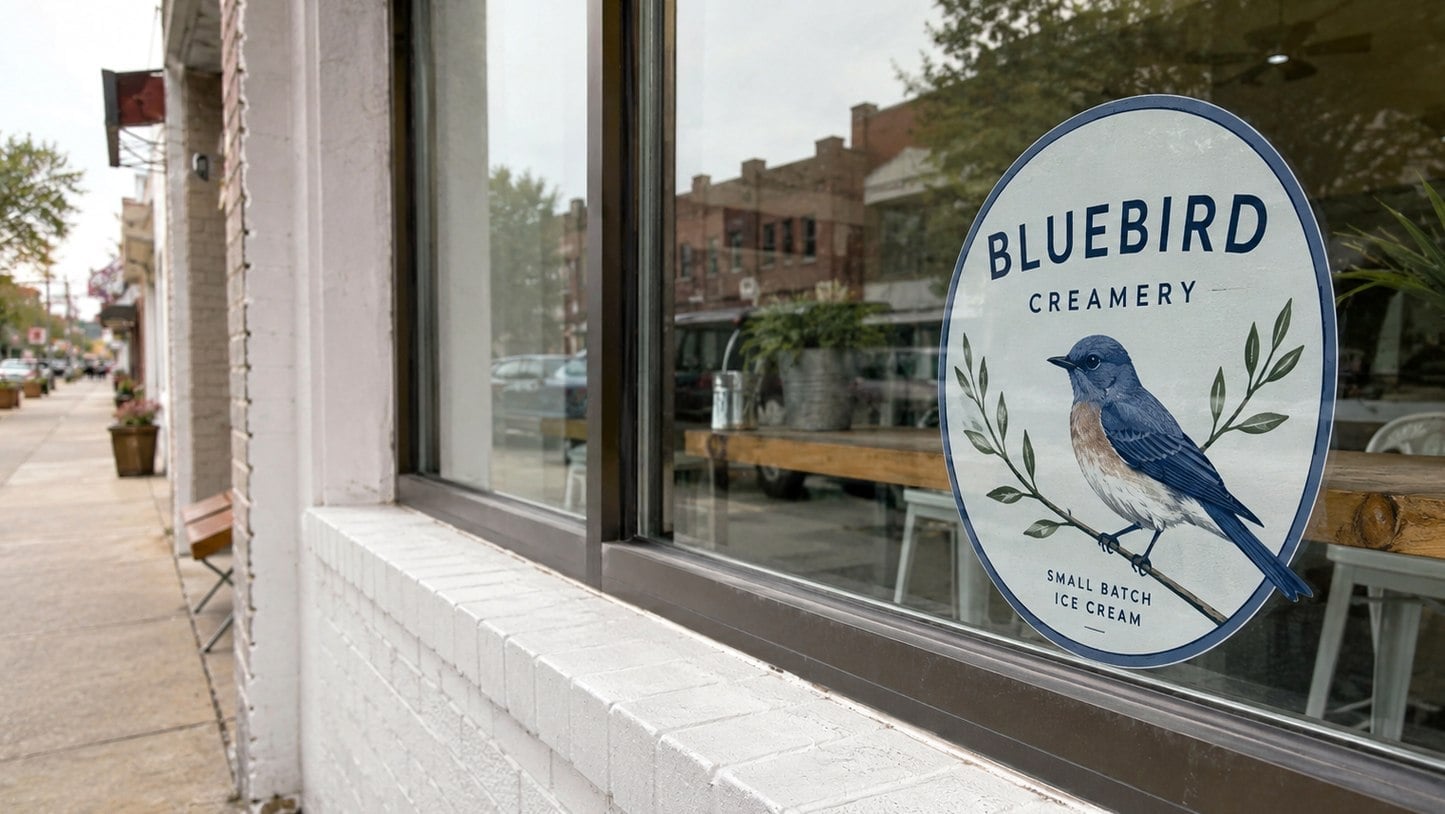
- Minimum order of 12 static clings
- Free mockup within 24 hours, unlimited free revisions
- Standard turnaround about 2 weeks after approval, faster with express shipping
- Pay nothing until you approve the design
- Clear, white, frosted, one-way vision and interior-read films available
What should you ask a static cling printer before you place an order?
Before you place a custom static cling order, ask any printer six things: which film options they stock, whether they print for interior reading, what the minimum order is, whether you see a free proof before paying, how long production takes, and what happens if the finished cling is wrong. Those answers tell you more about the final result than any sample photo on a website.
Static cling is a deceptively simple product. The film has no adhesive, it goes on the inside of most windows, and it has to read correctly from wherever your customer stands. A printer who treats it like a generic sticker job will miss details that only matter on glass. The questions below are the ones that separate a supplier who understands window graphics from one who simply runs files through a press.
Custom Static Cling answers every one of these up front: minimum order of 12, a free mockup within 24 hours, unlimited free revisions, standard turnaround of about 2 weeks, and nothing to pay until you approve the design. Use this checklist with any supplier you compare, including us.
Which static cling films does the printer offer, and which one fits my window?
Ask which static cling films the printer actually stocks, because the film choice decides how your design looks on glass more than the artwork does. A supplier that offers only one film forces every job into the same look, whether it suits the window or not.
A well-equipped static cling printer should be able to explain the difference between these films and recommend one for your specific window:
| Film | What it does on glass | Good fit for |
|---|---|---|
| Clear static cling | Lets the glass show around and through the design | Logos, hours and decorations where you want the window to stay open |
| White static cling | Gives colors a solid backing so they stay bright | Light colors, photos and signs that must read in any light |
| Frosted privacy cling | Diffuses the view while still letting light in | Offices, clinics and conference rooms |
| One-way vision cling | Shows a graphic outside while people inside still see out | Full-window promotions and storefront branding |
If the printer cannot tell you why a light-colored logo washes out on clear film, or when white film is the safer call, keep looking. Custom Static Cling recommends a film in the mockup and lets you mix cling types within one order.
Does the printer handle interior-read static cling correctly?
Ask directly whether the printer produces interior-read static cling and how they confirm which way your design should face. Because static cling usually goes on the inside of a storefront window, a design meant for people on the sidewalk has to be printed so it reads correctly through the glass. Getting this backward is the most expensive reprint in the category.
A good answer sounds like this: the printer asks where the cling will sit, who reads it, and then shows the orientation on the proof. A weak answer is a shrug and a note that they print whatever file you send. Static cling for a cafe menu board facing diners is printed normally; static cling for a shop window facing the street is usually reverse-printed.
Custom Static Cling offers interior-read cling as its own product and asks about placement on every quote. The free mockup shows the reading direction, so you can confirm it before anything is printed. If a supplier does not raise the question themselves, raise it for them and get the answer in writing.
What is the minimum order, and can I split it across designs?
Ask what the minimum static cling order is and whether that minimum applies per design or per order. Some printers set high minimums that push a small shop into buying far more clings than a single window season needs, which ties up cash and storage.
Custom Static Cling has a minimum order of 12, which suits a single storefront, a short-run event or a test before a larger rollout. That makes it practical to order a small batch of a seasonal design, see how it performs, and reorder the version that works. Ask any supplier these follow-up questions too:
- Can one order include different sizes or shapes, such as a die-cut shape cling alongside a rectangle?
- Can one order mix films, such as clear for the door and white for a sale sign?
- Can the clings ship to several locations from one order?
- Will a reorder match the color and size of the first run?
Clear answers here keep your first order small and your second order easy.
Will I see a proof before I pay, and how many changes are included?
Ask whether you receive a free digital proof of your static cling before you pay, and how many revisions come with it. The proof is where most problems get caught: reversed text, colors that disappear on clear film, a logo too small to read from the curb, or a layout that collides with a door handle.
Some printers charge for proofs, cap revisions, or require payment before artwork is reviewed at all. Each of those policies makes buyers more likely to approve a flawed design just to keep the job moving. A better arrangement lets you change the design until it is right without any pressure to settle.
Custom Static Cling returns a free mockup within 24 hours, includes unlimited free revisions, and asks for nothing until you approve the design. When you compare suppliers, ask to see what a proof looks like. A useful static cling proof shows the film color, the reading side, the overall size and how the design sits on the glass, not just the logo floating on a white background.
How long does custom static cling take from approval to delivery?
Ask how long custom static cling production takes after you approve the proof, and whether that time includes shipping. Many quoted turnarounds cover printing only, which leaves buyers surprised when a window promotion misses its launch date.
At Custom Static Cling, standard turnaround is about 2 weeks after approval, with faster turnaround available through express shipping. The mockup arrives within 24 hours of your request, so the biggest variable in the schedule is usually how quickly you approve the design. Ask any supplier for the same clarity:
- How soon will I see the first proof?
- When does the production clock start: at order, at payment or at proof approval?
- Does the quoted time include shipping to my address?
- What faster options exist if my date is tight?
- Will you tell me right away if the schedule changes?
Work backward from the day the cling must be on the glass. If a printer cannot give you a clear sequence of these steps, treat their turnaround as a guess rather than a commitment.
What artwork does the printer need, and do they help fix it?
Ask what artwork files the static cling printer accepts and whether their team helps when your file is not print-ready. Many small businesses have a logo saved only as a small web image, and a supplier who simply rejects it adds days to the order.
The right supplier tells you plainly which files print sharpest on cling film, flags low-resolution images before they reach the press, and offers design help so a rough file still becomes a clean proof. They should also catch issues specific to windows, such as thin lettering that disappears against a busy background or fine print that cannot be read through glass.
Custom Static Cling includes design help with every quote and turns whatever you send into a mockup you can review. If you are still building your artwork, the how it works page walks through the process from file to finished cling. Ask any supplier how they handle a weak file before you order, not after.
What happens if the static cling arrives damaged or wrong?
Ask every static cling printer what they do if the order arrives damaged, misprinted or different from the approved proof. The answer reveals how much responsibility the supplier takes for the finished product, and it is far easier to get that answer before you pay than after a problem appears.
Listen for specifics: who you contact, what photos they need, and whether the fix is a reprint or a credit. Also ask how the clings are packed, because static cling is shipped on its backing liner and should arrive flat or loosely rolled, never creased. The liner matters after delivery as well, since you need it to store the cling between seasons and reuse it.
Custom Static Cling reviews every order against the approved mockup before shipping and works with you directly if something is not right. A supplier willing to describe the process in plain terms is usually one that has the process in place.
How can I compare static cling quotes fairly?
Compare static cling quotes on what you actually receive, not on the headline figure. Two quotes can look similar while covering very different jobs: one may assume clear film with no reverse printing and no proof, while the other includes white film, interior-read printing, design help and revisions.
To compare fairly, send every printer the same brief: the window size, which side of the glass the cling goes on, who reads it, the film you want or the look you are after, the quantity, and the date the cling must be up. Then check each quote against the checklist above. Note anything the supplier did not mention, because an unasked question often becomes an extra charge or a missed detail later.
For a detailed quote from Custom Static Cling, use the custom quote form. You will get a free mockup within 24 hours and pay nothing until you approve it. If you are weighing shapes as well as suppliers, our guide to die-cut vs rectangular static cling helps you settle that choice first.
Frequently asked questions
What film question should I ask first when getting a static cling quote?
The first static cling film question to ask is whether the printer offers both clear and white film, and which they recommend for your window. Clear film keeps the glass open, while white film keeps colors bright. Custom Static Cling recommends a film for each design in the free mockup and explains why, so you can compare options before you approve anything.
How do I check that a printer understands reverse-printed static cling?
To check whether a printer understands reverse-printed static cling, ask how they decide which way the design faces. A capable supplier asks where the cling goes and who reads it, then shows the reading direction on the proof. Custom Static Cling raises this on every quote and offers interior-read cling as a dedicated product for street-facing windows.
Should a static cling proof show the window, not just the logo?
A static cling proof is far more useful when it shows the design in context: the film color, the reading side and the overall size on the glass. A logo on a plain white background hides the problems that matter on windows. Custom Static Cling returns a free mockup within 24 hours that is built to show how the finished cling will look.
Is it a red flag if a static cling printer wants payment before a proof?
Paying for static cling before seeing a proof puts the risk on you, because any problem in the artwork is found only after you have committed. A buyer-friendly printer shows the design first. Custom Static Cling asks for nothing until you approve the mockup, and unlimited free revisions mean you never have to accept a design that is not quite right.
What should I ask about static cling turnaround besides production time?
Beyond production time, ask a static cling printer when the clock starts, whether shipping is included and what faster options exist. A quoted production time can hide days of proofing and transit. Custom Static Cling sends a mockup within 24 hours, then quotes about 2 weeks after approval, with express shipping available when your window date is close.
Can a small shop order static cling without buying a large quantity?
A small shop can order custom static cling in modest quantities when the printer keeps a low minimum. Custom Static Cling has a minimum order of 12, which covers a single storefront, a few doors or a short promotion. Starting small lets you test a design on your own glass before committing to a larger run for every location.
What should I ask about reordering the same static cling later?
When you plan to reorder static cling, ask whether the printer keeps your approved artwork on file and how they keep colors and sizes consistent between runs. Seasonal and franchise windows depend on matching clings year after year. Custom Static Cling stores your approved design so a repeat order starts from the same mockup rather than from scratch.
How do I compare two static cling quotes that look very different?
Two static cling quotes that look very different usually describe different jobs. Line them up on film type, reading side, size, quantity, proofing, revisions and delivery date. Send both printers the identical brief and ask what each includes. Custom Static Cling spells out every item in the mockup, so you can see exactly what you are approving before paying.
Should I ask how static cling is packed for shipping?
Asking how static cling is packed is worth the extra minute, because creased or crushed film can show marks on the glass. Clings should ship on their backing liner, kept flat or loosely rolled. Keep that liner after installation, since you need it to store and reuse the cling. Custom Static Cling packs every order to protect the film in transit.
What questions should a franchise ask a static cling supplier?
A franchise ordering static cling should ask whether one order can ship to several locations, whether different window sizes can share a design, and how artwork approval works across the team. Consistency matters most. Custom Static Cling can split an order across addresses and keep one approved design on file, so every location receives clings that match the brand standard.
Does a static cling printer need to know about my window glass?
A static cling printer should ask about your glass, because cling film needs a smooth, clean surface and works best on the inside of the window. Textured, coated or outdoor-facing surfaces change the recommendation. Telling Custom Static Cling where the cling will hang lets the team suggest the right film and orientation before the mockup is made.
What does good design help look like from a static cling supplier?
Good design help from a static cling supplier means turning a rough logo or idea into a clean, print-ready mockup without extra steps on your side. The team should flag thin lettering, small text and low-resolution images that will not read on glass. Custom Static Cling includes design help with every quote and revises until you approve.
Get a free mockup for your static cling
Send your logo or idea and the quantity you have in mind. Custom Static Cling returns a free mockup within 24 hours, you approve the design before anything is produced, and standard turnaround is about two weeks with faster options available. Get a custom quote.
Win Free Stuff
Enter below for a chance to win plus receive 10% off your first order.
🎉 You are in!
We will text you your 10% off code. Good luck!